


There is something about the first shift into fall that changes the way we want to eat. Even when it is technically still warm outside, you can feel that transition beginning. The light changes. The evenings come a little earlier. We start reaching for pumpkin, squash, cinnamon, ginger, dark chocolate, roasted vegetables and foods that feel warmer, richer and more grounding than what we wanted in the middle of summer.
I have always loved this transition because food can help us move with the seasons rather than fight them. Fall is naturally a time of change and letting go, and there is something beautiful about allowing our cooking to change with it.
That does not mean we suddenly need to eat heavier foods or spend the next three months drinking over-sweetened seasonal lattes. In fact, some of the foods we associate most strongly with fall are deeply nutritious when we go back to the actual ingredients.
Pumpkin deserves much more credit nutritionally. It is not just a flavor that appears in coffee shops every September. Pumpkin is deep orange color comes from carotenoids, including beta-carotene, which the body can convert into vitamin A. Pumpkin also provides fiber, potassium and other micronutrients, and it can bring natural sweetness, richness and body to recipes without requiring enormous amounts of added sugar.
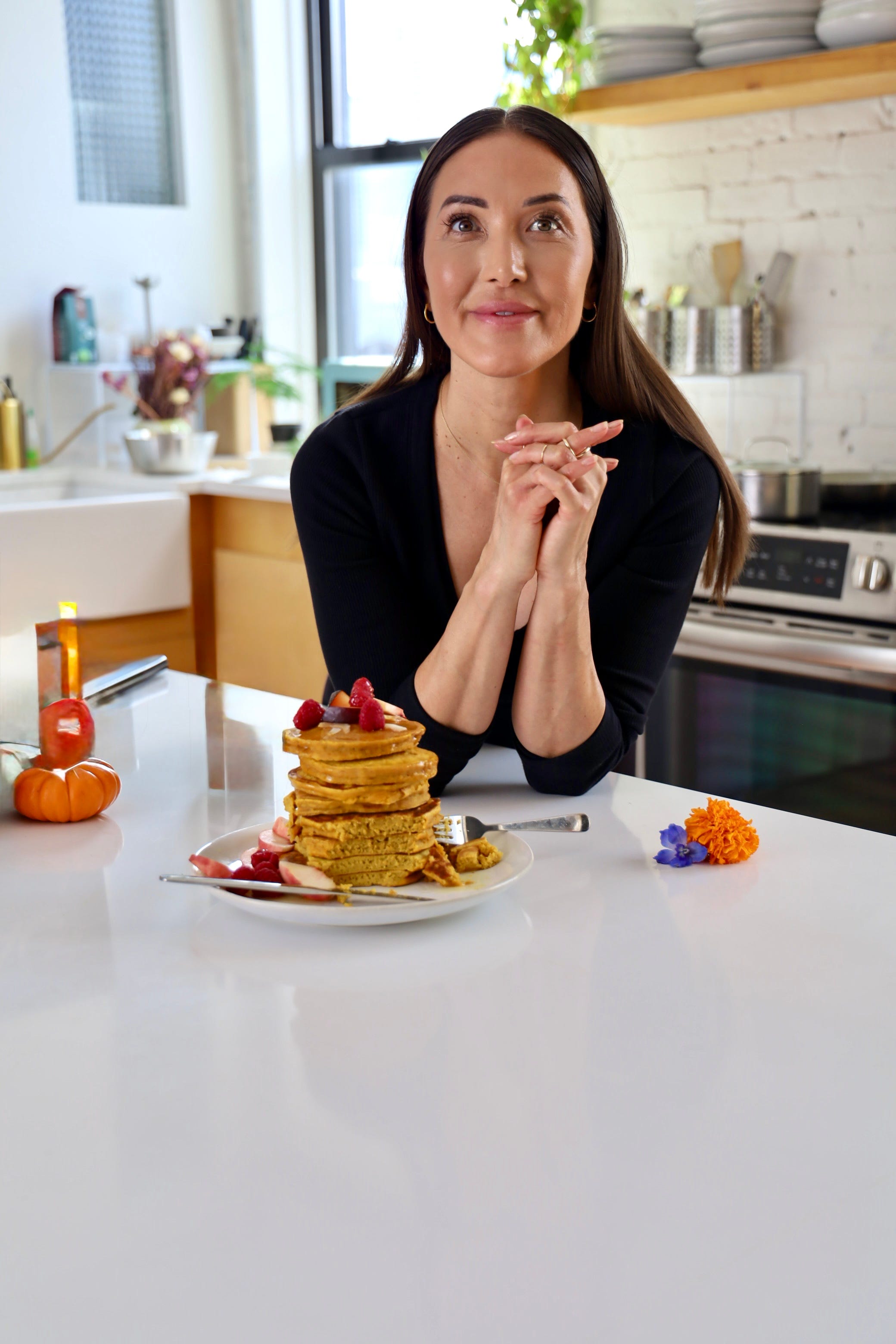
I want to share with you - how to use these ingredients in ways that are really delicious. We are starting with two smoothies, moving into the pumpkin pie pancakes I have been making for years, then getting into one of my favorite Japanese fall ingredients, kabocha squash, and finally talking about the warming spices that make the entire season taste like fall.
Pumpkin Spice Smoothie with Greens
I started making pumpkin smoothies years ago while developing recipes for Clean Green Drinks, and Shape + Men’s Journal recipe developing and I remember realizing how surprisingly good real pumpkin was in a smoothie. You can use plain canned pumpkin, which is incredibly easy, or you can roast fresh pumpkin and blend some of the cooled pieces directly into your smoothie.
The pumpkin gives the smoothie thickness, creaminess and that unmistakable fall flavor. Then I add pumpkin spice, usually some combination of cinnamon, ginger, nutmeg, cloves or allspice. I also love adding leafy greens because once everything is blended together, you still get the warming pumpkin flavor while quietly getting another serving of vegetables into your day.
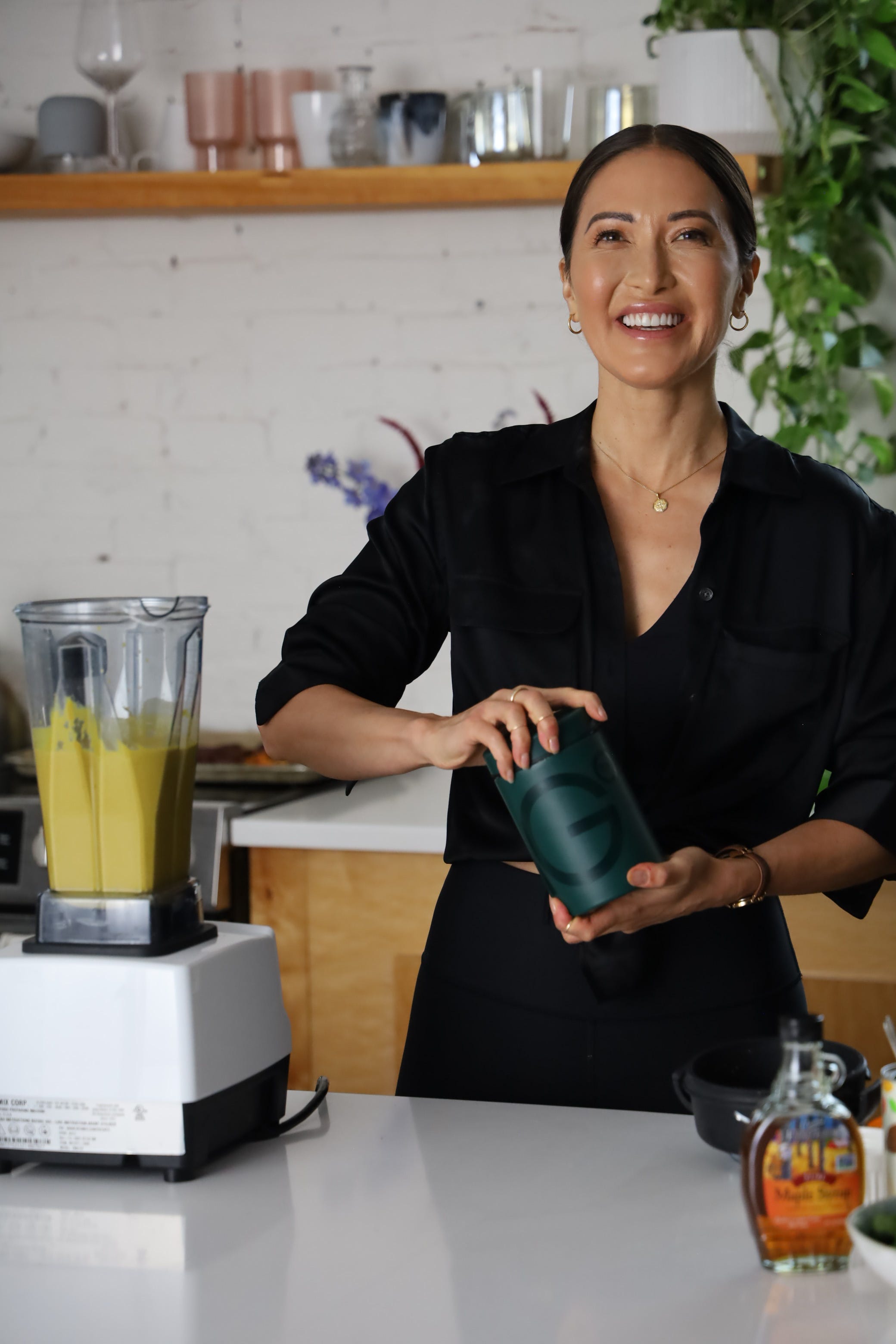
I want to share with you what real pumpkin tastes like and what it can actually contribute nutritionally + for beauty benefits!
The benefits start with beta-carotene. Your body can convert beta-carotene into vitamin A, which is important for normal skin-cell turnover, vision and immune function. Pumpkin also provides fiber, which supports digestive health and can help a meal or snack feel more satisfying. Its potassium contributes to normal muscle and nerve function
Adding leafy greens expands the nutritional profile even further. Depending on the greens you choose, you may be adding folate, vitamin K, vitamin C and additional carotenoids and plant compounds. This is why I like looking at beauty nutrition as something cumulative. Healthy-looking skin is not created by one ingredient, but repeatedly eating colorful fruits and vegetables gives your body nutrients it actually uses to maintain normal tissue and cellular function.
Pumpkin: Rich in beta-carotene, which the body converts to vitamin A to support normal skin-cell turnover. Pumpkin also provides vitamin C, which contributes to normal collagen formation and helps protect cells from oxidative stress.
Kabocha squash: A concentrated source of carotenoids, including beta-carotene, plus vitamin C. These nutrients help support healthy skin tissue and provide antioxidant protection against everyday oxidative stress.
Dark leafy greens: Depending on the variety, greens provide folate, vitamin C, vitamin K and carotenoids such as lutein and beta-carotene. Together, these nutrients support normal cell function, collagen production and overall skin health.
Pumpkin spice: Cinnamon, ginger, nutmeg and cloves contain antioxidant plant compounds. They are not a beauty cure on their own, but they can add more polyphenols and phytonutrients to your diet while giving recipes natural warmth and flavor without relying on extra sugar.
Unsweetened cocoa powder: Cocoa is naturally rich in flavanols, antioxidant compounds that have been studied for their role in supporting healthy circulation and protecting cells from oxidative stress. Better circulation also helps deliver oxygen and nutrients throughout the body, including the skin.
These are real beauty benefits. It is not an instant-glow promise. It is rather super-nourishment in the body that keeps you glowing!
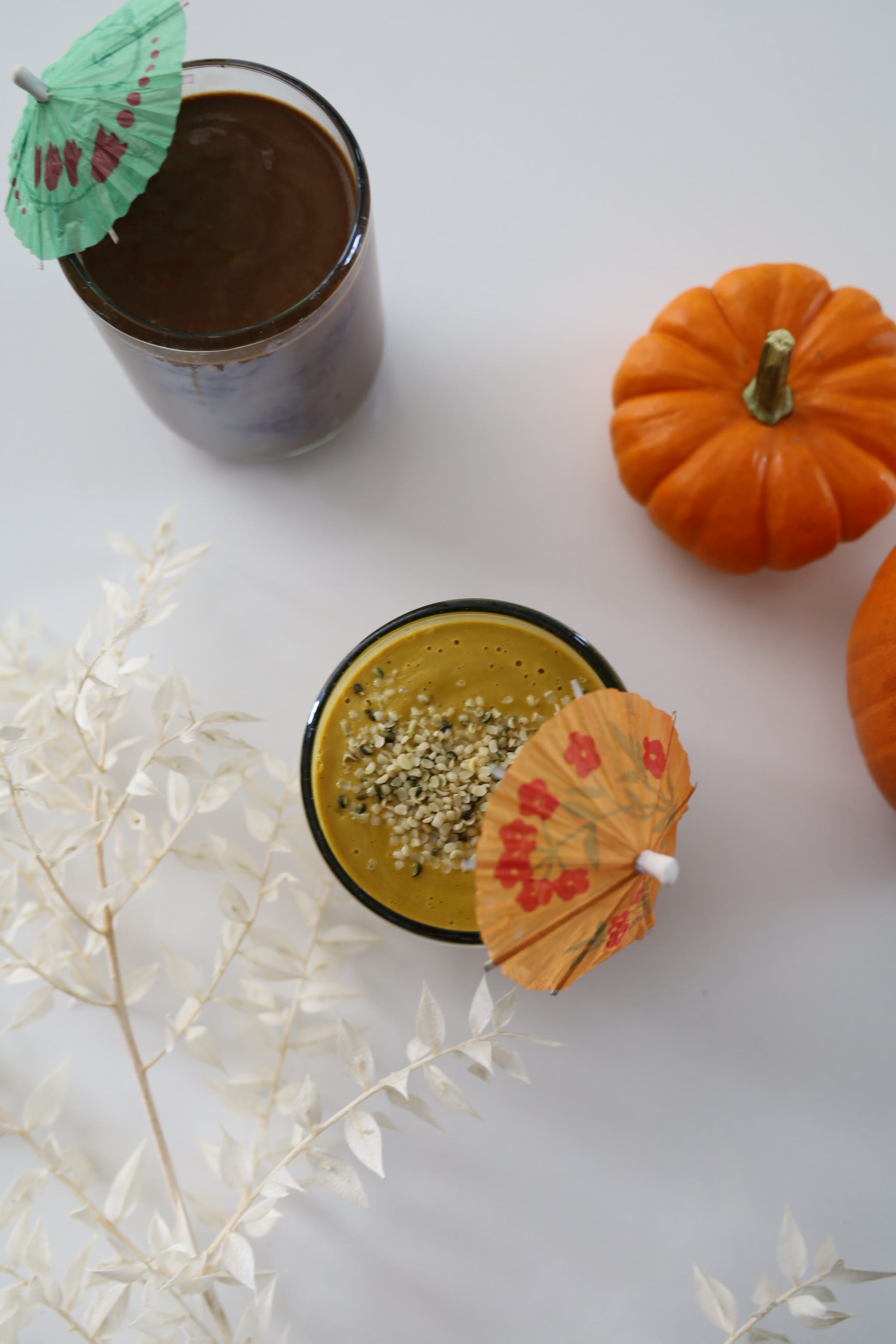
Dark Chocolate Pumpkin Smoothie
If a straight pumpkin smoothie is not your thing, make it chocolate. Mhmmm here we go.
I made a pumpkin smoothie recently and halfway through I thought, I have to add cocoa powder to this!! There is something about chocolate that makes a smoothie immediately taste more like a milkshake, and suddenly the entire experience feels more indulgent.
I use unsweetened cocoa or cacao powder so you can control the sweetness yourself. You still get the creaminess and fiber from the pumpkin, but the cocoa gives the smoothie depth, richness and a completely different personality.
This is also where chocolate deserves a better reputation in wellness.
Cocoa contains naturally occurring polyphenols, including flavanols, which have been studied for their relationship to cardiovascular health and normal blood-vessel function. Pumpkin brings the carotenoids, fiber and potassium, while cocoa adds another group of plant compounds.
If you enjoy dark chocolate itself, choosing chocolate with a higher percentage of cocoa generally means you are getting more cocoa solids and typically less sugar than you would from milk chocolate. I personally love dark chocolate, and I do not think it needs to be treated as something that exists outside a nutritious diet.
The benefit of this smoothie is that it satisfies two things at once. You are getting fiber and carotenoids from pumpkin and polyphenols from cocoa, but you are also making something that tastes genuinely good. That matters because a healthy way of eating is much easier to maintain when the food is pleasurable.
Pumpkin Pie Pancakes
Now we need to talk about pancakes because fall wellness cannot only be smoothies.
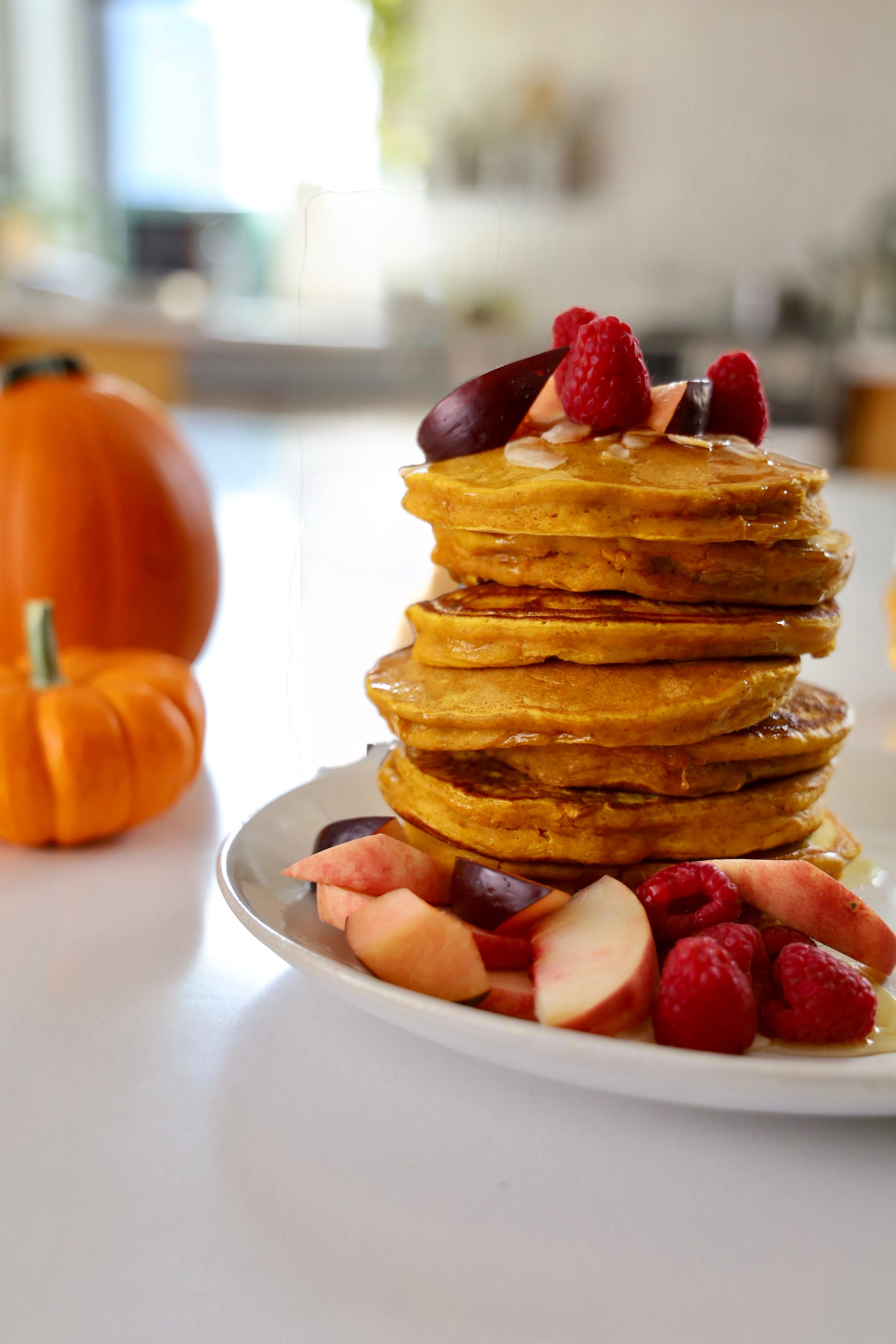
I have been making my pumpkin pie pancakes for years, and they are one of my favorite examples of how comfort food can become more nutrient dense without turning into some sad version of the original.
Real pumpkin adds moisture, flavor and a little natural sweetness. It gives the pancakes that rich fall quality without needing the entire recipe to depend on sugar or syrup for flavor.
You can also make the meal more substantial depending on what works for you. Add eggs to the batter. Use whole-grain flour. Serve them with Greek yogurt if you eat dairy. Add nuts or seeds. The point is not to turn pancakes into a protein competition. It is simply to build a breakfast that satisfies you and gives you more nutritionally than refined flour and sugar alone.
The pumpkin itself provides beta-carotene, fiber and potassium. Pairing that with protein, healthy fats and additional fiber can help make breakfast more filling and can support steadier energy throughout the morning.
This connects to something I have cared about for most of my career. Long before “adding nutrients” became a trend online, I was developing recipes for cookbooks, magazines and television that tried to make familiar foods more useful nutritionally without making them taste like health food.
People have been rewatching the first season of Top Chef now that we are around the twenty-year mark, and I have seen some very kind comments about how I have aged since then. I obviously cannot attribute how anyone looks twenty years later to pumpkin pancakes or any individual food. Aging is enormously complex. But I do believe the small choices we make repeatedly matter. I have spent decades cooking with vegetables, greens, whole foods, tea, spices and nutrient-dense ingredients because I genuinely like eating this way.
That is a much more interesting beauty conversation to me than looking for one miracle supplement or one perfect food.
Kabocha: The Japanese Pumpkin I Want Everyone to Try
Then there is kabocha, one of my favorite fall foods.
Kabocha is often called Japanese pumpkin or Japanese squash, although you will also find it used in other cuisines and cultures. If you have never bought one, look for the round squash with a dark green exterior and deep yellow-orange flesh.
The texture is one of the reasons I love it. Kabocha is dense, creamy and naturally sweet. To me, it tastes somewhere between roasted chestnut, butternut squash and sweet potato.
You can roast it until the edges caramelize. You can simmer it gently in broth. You can add it to salads or grain bowls. You can blend it into a beautiful fall soup.
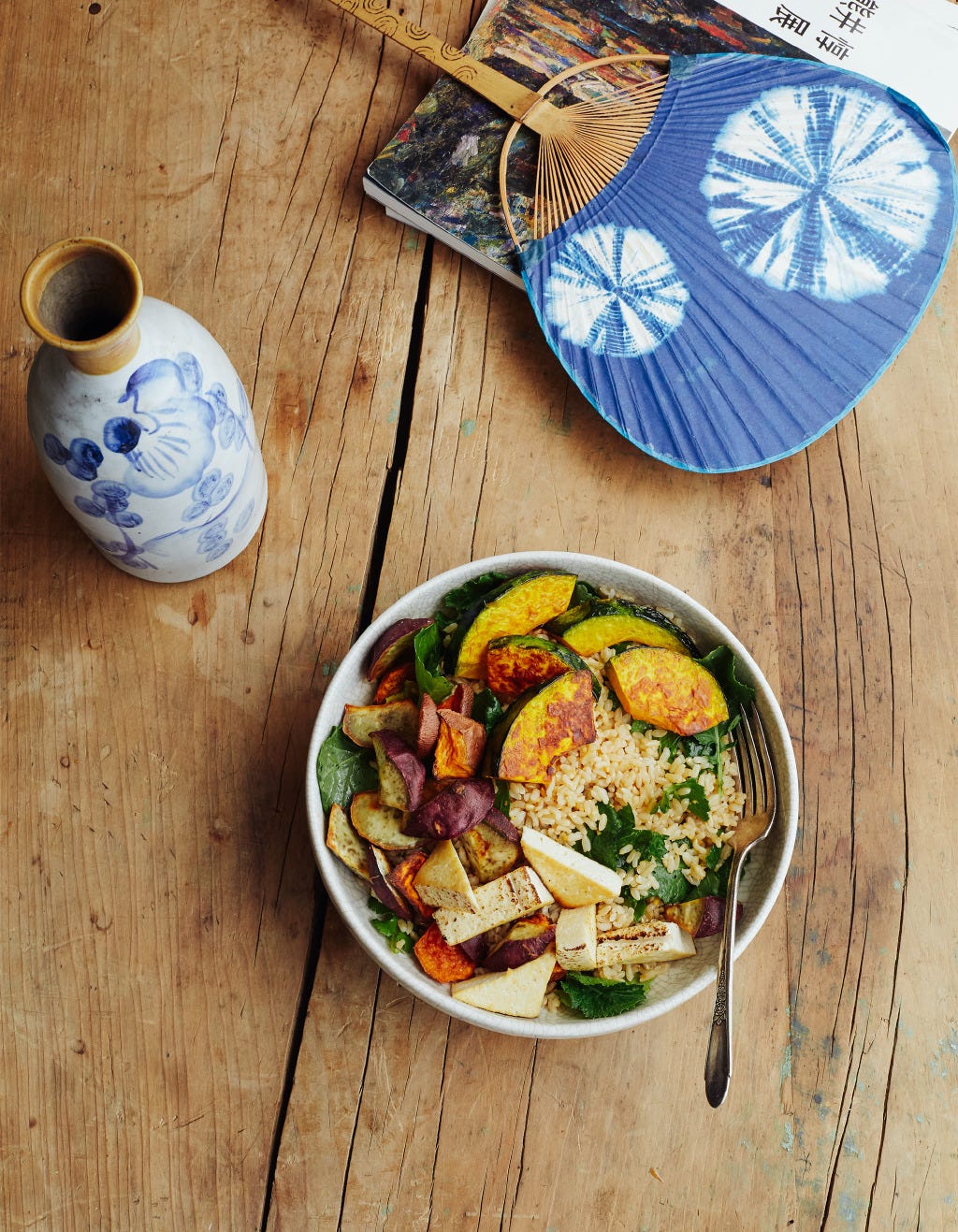
I grew up eating kabocha through my Japanese family and later began cooking with it more in California and New York. Over the years, I have introduced it to friends, chefs, doctors and nutrition professionals who had simply never cooked with it before. That is one of my favorite things about food. Sometimes an ingredient that has existed in one culture for generations feels completely new to someone else.
Nutritionally, kabocha offers many of the same reasons I love other deeply colored orange vegetables. It provides carotenoids, fiber, potassium and vitamin C, although the precise nutrient profile varies by variety and preparation.
The carotenoids provide antioxidant compounds and include beta-carotene, which the body can use to produce vitamin A. Vitamin C has its own important beauty connection because the body requires it for normal collagen synthesis. Fiber supports digestive health and satiety, while potassium contributes to normal muscle and nerve function.

The satiety piece matters too. Kabocha is dense and satisfying. A bowl of kabocha soup or a plate of roasted squash can feel substantial without needing an enormous number of ingredients.
Roasting is probably the easiest place to begin. The heat concentrates its natural sweetness and gives the edges a beautiful caramelized texture. If you want something softer and more comforting, blend it into soup with broth and aromatics.
I have kabocha recipes across my work, including Cook Yourself Sexy, Clean Green Eats and Kintsugi Wellness, and it remains one of those ingredients I come back to every fall.
Why Pumpkin Spice Deserves Its Own Place in the Pantry
Finally, we need to talk about pumpkin spice itself.
Go into almost any grocery store this time of year and you will find a small jar of pumpkin pie spice. It is usually some combination of cinnamon, ginger, nutmeg, cloves and sometimes allspice.
That little jar can completely change the way a smoothie, pancake, coffee, tea or baked dish tastes.
These spices contain their own naturally occurring plant compounds and have long histories of culinary and traditional use. There is ongoing research into individual compounds found in spices, but I think their most useful everyday benefit is much simpler.
If cinnamon, ginger, nutmeg and cloves make a bowl of oatmeal, smoothie or homemade latte taste more exciting, you may not need as much added sugar to make that food satisfying. The spices create aroma, complexity and the emotional feeling of fall without contributing the large amount of sugar that often comes with commercially flavored drinks and desserts.
That is one of the easiest wellness changes you can make. Learn how to make simple food taste great.
What This Has to Do With Beauty, Energy and Feeling Good
When people hear “beauty foods,” they often expect a list of magical ingredients that will somehow change their skin overnight. That is not how nutrition works. The real story is much more cumulative.
Colorful vegetables such as pumpkin and kabocha provide carotenoids. Leafy greens contribute vitamins, minerals and plant compounds. Cocoa gives us flavanols and other polyphenols. Fiber supports digestive health. Protein helps maintain and repair tissues. Vitamin C is required for normal collagen synthesis. Potassium contributes to muscle and nerve function.
None of those nutrients works alone, and no smoothie is going to undo an otherwise poor diet, inadequate sleep, chronic stress or dehydration.
But when your meals consistently contain colorful plants, fiber, adequate protein, healthy fats and minimally processed ingredients, you are giving your body more of what it needs to function normally. Over time, that can support energy, digestive health, healthy skin and overall well-being.
Those choices seem very small, but wellness is built out of small choices repeated for years.
Your Fall Reset
There can be a little melancholy in fall. My mother has always talked about that feeling as the season changes, when summer begins to disappear and everything outside seems to remind us that nothing stays exactly the same.
I actually think there is something useful in that. Trees do not fight the season. They change with it. They let go.
Maybe our fall reset can be less about trying to reinvent ourselves and more about noticing what we need now. A little more warmth. A little more grounding. Better sleep. More home cooking. Foods that satisfy us. Meals that nourish us instead of leaving us chasing something else an hour later.
A pumpkin smoothie, a dark chocolate pumpkin smoothie, a stack of pumpkin pie pancakes or a bowl of roasted kabocha soup may sound simple, because they are. That is the point. Wellness does not need to be complicated to work.
The version of wellness that lasts is built around nourishment, pleasure and consistency. It is not about chasing one perfect food or eating in a way that makes you miserable. It is about learning how to make food you love while understanding what those ingredients can actually do for you.
Fall gives us some of the most beautiful ingredients for doing exactly that.
If you want the recipes, you can find more at CandiceKumai.com and across my Instagram, TikTok and YouTube. My books Kintsugi Wellness, Clean Green Eats and Clean Green Drinks also have years of recipes built around this same philosophy of making real food taste incredibly good while giving your body something back.
And if Wabi Sabi my podcast has been useful to you, please take a moment to follow the podcast and leave a five-star review on Apple or Spotify. Share this episode or Substack with two friends who might need a little fall inspiration too. It is one of the simplest ways you can help keep this work growing and allow me to continue making useful wellness content for you every week.
Happy almost fall. Stay kind, humbled and grounded, eat well, and let the season remind you that change can be beautiful too. x candice
I love these pumpkin recipes.
Cocoa is so underrated in smoothies!